
lovethailand home >Northeastern Travel Attractions >Si Sa Ket Travel Attractions >Khun Han >Bak Dong > Prasat Tamnak Sai
TL;DR: Prasat Tamnak Sai is located at Ban Tamnak Sai, Bak Dong Subdistrict, Khun Han District, Si Sa Ket Province, open Daily, hours 08.30 – 16.30.
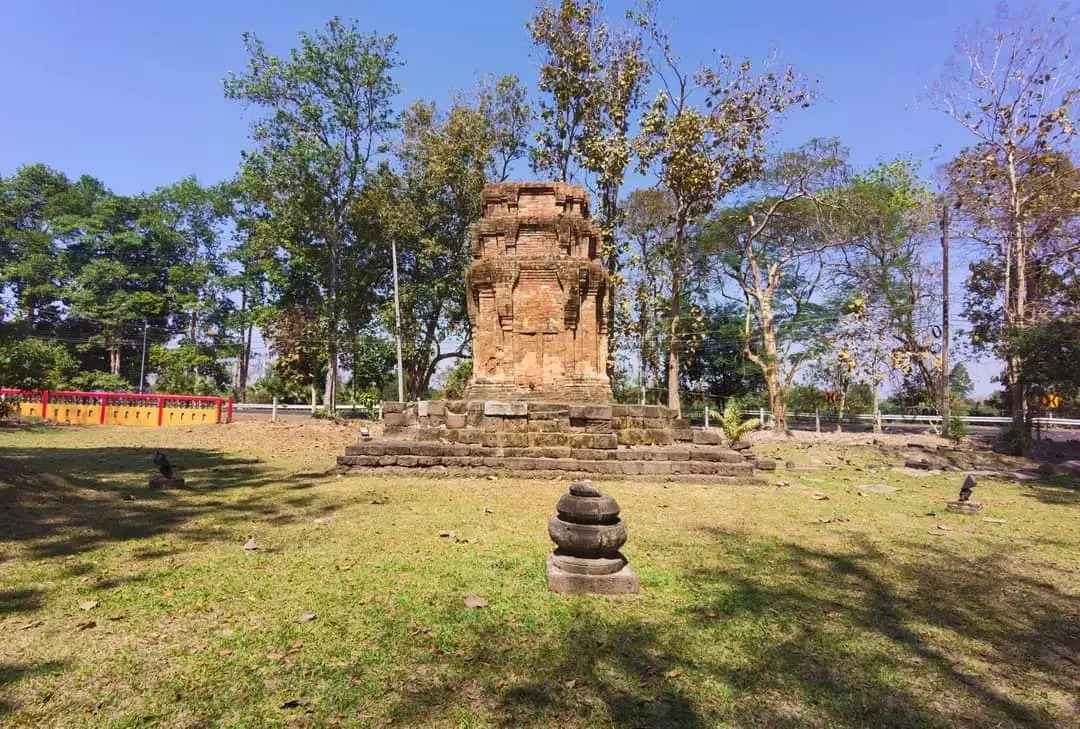
Prasat Tamnak Sai
Open Days: Daily
Opening Hours: 08.30 – 16.30
Prasat Tamnak Sai, also known as Prasat Tham Chan, is a small ancient Khmer sanctuary located at Ban Tamnak Sai, Bak Dong Subdistrict, Khun Han District, Si Sa Ket Province. The monument is a single brick sanctuary standing on a sandstone base, with a square plan measuring about 4 meters on each side and indented corners in the traditional Khmer architectural style. It faces east, has only one real entrance on the eastern side, and contains 3 false doors carved into the brickwork on the other sides. Two sandstone lion sculptures stand near the entrance, while the original lintel depicting Vishnu reclining on the cosmic serpent Ananta is now preserved at Phimai National Museum in Nakhon Ratchasima. Prasat Tamnak Sai is a Brahmanical-Hindu sanctuary dating to around the 15th–17th Buddhist centuries and is one of the important early Khmer monuments in Si Sa Ket Province.
Prasat Tamnak Sai is a meaningful destination for travelers who want to understand the Khmer heritage of Lower Northeastern Thailand in a quiet and local setting. Unlike large historical parks, this site is compact, peaceful, and closely connected with the surrounding rural community. Its value does not come from monumental scale, but from the clarity of its architectural form, the remaining sandstone elements, the symbolic eastern entrance, the false doors, and the important story of the Vishnu lintel that once belonged to the sanctuary. For foreign travelers, the site offers a direct and accessible way to read the structure of a small Khmer shrine without the complexity of a much larger temple complex.
The area around the sanctuary has been leveled, allowing the brick tower to stand out clearly in the landscape. The monument rises from a sandstone base, emphasizing its role as a sacred structure. Sandstone was used for key architectural elements such as the base and doorway because it is strong and suitable for detailed carving, while brick was used for the main body of the sanctuary. This combination of brick and sandstone is common in several ancient Khmer monuments in the region, especially smaller shrines built as single towers.
The sanctuary has a square plan with indented corners. This design gives the structure a more dynamic appearance than a plain square tower. The indented corners create lines, shadows, and vertical movement, leading the eye upward toward the original superstructure. Although the upper part of the tower is no longer complete, the surviving form still expresses the architectural intention of the ancient builders. The tower was not merely a practical building; it was designed as a sacred center within the landscape.
The sanctuary faces east, a highly significant direction in ancient Khmer religious architecture. The east is associated with sunrise, light, renewal, ritual entry, and sacred beginnings. The eastern doorway is therefore the only real entrance to the sanctuary. The other 3 sides contain false doors, which were not used for movement but played an important symbolic role. They completed the visual and cosmological balance of the building, making the sanctuary appear oriented toward all directions while maintaining the east as the principal ritual axis.
The false doors at Prasat Tamnak Sai are especially interesting because they are carved or formed directly into the brick surface. Instead of using complete sandstone door frames on every side, the builders created the image of doors on the brick walls. This technique allowed the tower to maintain sacred symmetry while using a simpler construction method. Walking around the sanctuary helps visitors understand the difference between the functional entrance and the symbolic false doors.
At the front of the sanctuary stand 2 carved sandstone lions. In Khmer art, lions often appear as guardians at sacred entrances. They symbolize power, protection, and the boundary between ordinary space and sacred space. Their presence at Prasat Tamnak Sai suggests that the entrance once carried strong ritual meaning. Even though many parts of the monument have been damaged or moved over time, the lions remain important visual evidence of the original sacred setting.
The front doorway is framed in sandstone. This doorway is one of the most important surviving architectural elements at the site. Brick formed the main body of the tower, but sandstone was used where strength, precision, and decoration were required. Door frames, lintels, and carved details were normally made of sandstone because the material allowed the artisans to create refined religious imagery. Although some decorative elements have disappeared, the sandstone doorway still marks the original sacred axis of the monument.
The original lintel of Prasat Tamnak Sai depicted Vishnu reclining on the cosmic serpent Ananta. In this composition, Vishnu rests upon the 7-headed serpent, with Lakshmi seated near his feet and Brahma emerging from Vishnu’s navel. On both sides of Brahma are figures of sages and seated attendants within ornamental arches. This imagery is one of the most important Hindu cosmological scenes. It represents the cosmic moment between destruction and creation, with Vishnu as the preserver of the universe and Brahma as the creator emerging from him.
The lintel is now preserved at Phimai National Museum in Nakhon Ratchasima Province. Its preservation in a museum protects the artwork from deterioration and allows it to be studied in a controlled environment. At the same time, knowing that the lintel originally belonged to Prasat Tamnak Sai helps visitors understand the original religious meaning of the sanctuary. The site and the museum object should be understood together: the tower preserves the architectural context, while the lintel preserves the sacred imagery that once completed the entrance.
The Vishnu reclining scene is central to the interpretation of the monument. Vishnu reclining on Ananta in the cosmic ocean expresses the idea of universal order and the renewal of creation. Lakshmi represents prosperity and auspiciousness, while Brahma emerging from Vishnu’s navel represents the birth of the world. When such imagery was placed above the entrance to a sanctuary, it transformed the act of entering the building into a symbolic passage into sacred cosmic space. This makes Prasat Tamnak Sai much more meaningful than a simple brick ruin.
Prasat Tamnak Sai is generally understood as a Brahmanical-Hindu shrine dating to around the 15th–17th Buddhist centuries, with some sources placing it from the mid-16th to early 17th Buddhist centuries. This was a period when single-tower Khmer sanctuaries were built in several areas of Lower Northeastern Thailand. The site reflects the religious and artistic influence of the ancient Khmer world, including the worship of Hindu deities and the use of sacred architectural orientation. It is one of the older Khmer monuments associated with Si Sa Ket Province.
Although the Vishnu lintel reflects Vaishnavite symbolism, information about the site also connects it with the Shaivite tradition, in which Shiva was worshipped as the supreme deity. This complexity is not unusual in Khmer religious landscapes. Many ancient sanctuaries contain layered meanings, changing religious uses, or combined symbolic traditions. For travelers, the important point is that Prasat Tamnak Sai clearly belongs to the Brahmanical-Hindu religious world and preserves evidence of Khmer religious art in the region.
The surrounding ground shows signs of having been leveled, and the area may once have been connected with an ancient community around the shrine. Khmer sanctuaries were rarely isolated structures. They were usually linked with settlement areas, water sources, ritual movement, and community life. The location of Prasat Tamnak Sai at Ban Tamnak Sai therefore suggests that the sanctuary was once part of a broader sacred and social landscape.
To the east of the sanctuary is a baray or water feature associated with the sacred landscape. Water was important in ancient Khmer architecture, not only for practical use but also for ritual and cosmological meaning. It represented fertility, purification, prosperity, and cosmic order. The relationship between the sanctuary and the eastern water feature helps visitors understand that Prasat Tamnak Sai was not just a brick tower but part of a designed sacred environment.
A good way to explore Prasat Tamnak Sai is to begin on the eastern side, where the main entrance is located. From this position, visitors can see the principal axis of the sanctuary, the sandstone doorway, the lion sculptures, and the raised sandstone base. After that, visitors should walk around the tower to observe the 3 false doors and the indented-corner plan. Returning to the eastern side at the end of the walk helps make clear why the east was the main ritual direction of the monument.
The main areas of interest at the site include the sandstone base, the brick sanctuary tower, the eastern entrance, the sandstone doorway, the 2 carved lions, the 3 false doors, the fallen architectural fragments such as the lotus finial, the sculptural base inside the sanctuary area, the eastern water feature, and the leveled surrounding ground that connects the site with the local landscape. Because the site is small, careful observation is more rewarding than a quick walk-through.
The atmosphere at Prasat Tamnak Sai is calm and rural. Visitors will see an old brick shrine standing in an open area with trees and community surroundings. This quiet setting makes the site suitable for slow cultural travel, heritage photography, and educational visits. The monument does not overwhelm visitors with size; instead, it encourages close attention to form, material, direction, and meaning. This is one of the best ways to appreciate smaller Khmer sanctuaries in Thailand.
Prasat Tamnak Sai also adds depth to travel in Khun Han District. The district is often associated with waterfalls, forest landscapes, and routes toward the Phanom Dong Rak mountain range, but it also contains important traces of ancient Khmer culture. Visiting Prasat Tamnak Sai allows travelers to combine historical heritage with natural attractions such as Samrong Kiat Waterfall and Huai Chan Waterfall, as well as spiritual sites such as Wat Phrai Phatthana and other cultural places in southern Si Sa Ket.
The best time to visit is in the morning or late afternoon. Softer light makes the brick surface, sandstone base, and carved lion sculptures easier to see and photograph. Midday visits are possible, but visitors should prepare for strong sunlight. The site is open and easy to walk around, yet parts of the ground may be uneven. Comfortable shoes, drinking water, a hat, and respectful behavior are recommended, especially for travelers planning to continue to nearby natural attractions.
Getting There is most convenient by private car or rental vehicle. From Khun Han town, take Highway 2127 on the Khun Han-Ban Samrong Kiat route for about 20 km. The sanctuary is located in Ban Tamnak Sai, Bak Dong Subdistrict. From Si Sa Ket city, the distance is about 81 km, and travelers should allow around 1.30–2 hours depending on road conditions and stops along the way. The route is suitable for a day trip that combines historical and natural attractions in Khun Han District.
Travelers without private transport should first reach Khun Han town and then arrange local transport or a hired vehicle to Ban Tamnak Sai. Public transport directly to the site is limited, so planning ahead is important. A private vehicle is the easiest option for travelers who want to visit Prasat Tamnak Sai together with Samrong Kiat Waterfall, Huai Chan Waterfall, Wat Phrai Phatthana, or Prasat Don Tuan.
A normal visit takes about 30–60 minutes. Travelers who want to study the architecture, photograph the site, and understand the connection between the tower, the doorway, the false doors, the lions, and the water feature should allow about 1–1.30 hours. Although the site is compact, its details contain a rich story about Khmer religious architecture and Hindu cosmology.
Responsible behavior is essential when visiting Prasat Tamnak Sai. Ancient brickwork, sandstone fragments, and carved sculptures are irreplaceable cultural heritage. Visitors should not climb on the sanctuary, write on the bricks, move stone fragments, sit on the architectural pieces, touch carvings unnecessarily, or leave litter at the site. Respectful travel helps preserve the monument and shows respect for the local community that lives with this heritage.
For travelers interested in Khmer art, Prasat Tamnak Sai is especially useful because it presents the basic components of a single Khmer sanctuary in a clear way. Visitors can study the base, building material, plan, orientation, real doorway, false doors, guardian lions, and the religious meaning of the lintel. Even though the original lintel is now preserved at Phimai National Museum, its story remains essential to understanding the site. It connects the brick tower with the Hindu image of Vishnu reclining in the cosmic ocean.
Prasat Tamnak Sai also fits well into a wider Khmer heritage route in Si Sa Ket Province. When compared with Prasat Ta Leng, Prasat Prang Ku, Prasat Ban Samo, Prasat Sa Kamphaeng Yai, and Prasat Sa Kamphaeng Noi, it helps show the diversity of Khmer monuments in the province. Some were Hindu shrines, some were Mahayana Buddhist hospital chapels, and some continued to be used in later Buddhist contexts. Prasat Tamnak Sai is important because it preserves the form of a small single-tower Brahmanical sanctuary.
The connection between Prasat Tamnak Sai and Phimai National Museum is another reason the site is meaningful. Travelers who have seen the Vishnu lintel at the museum can better understand its original architectural context by visiting the sanctuary. Travelers who visit Prasat Tamnak Sai first may later appreciate the museum display more deeply. This relationship between archaeological sites and museum collections creates a wider path for learning about Khmer heritage in Thailand.
At the community level, Prasat Tamnak Sai gives Ban Tamnak Sai and Bak Dong Subdistrict a strong cultural identity. A quiet rural landscape contains an ancient Hindu sanctuary that has survived for centuries. The monument transforms the area from a simple stop along the Khun Han-Ban Samrong Kiat route into a cultural destination worth visiting. It reminds travelers that important heritage is not always located only in major cities or famous historical parks; it can also stand quietly within local communities.
For photography, the eastern front is the best angle for capturing the sanctuary, entrance, sandstone base, and guardian lions together. Side views are useful for showing the indented-corner plan and old brick texture. Close-up photographs of the sandstone doorway and lion sculptures should be taken carefully without touching or leaning on the objects. Morning and late afternoon light usually provide the most attractive texture and shadow on the brick and sandstone surfaces.
Families and students can also benefit from visiting Prasat Tamnak Sai. The site provides a clear lesson in ancient building materials, Khmer religious orientation, guardian sculptures, symbolic doorways, and the role of lintels in temple architecture. It is a practical outdoor classroom where history, art, religion, and local geography can be understood through a real place rather than only through books.
For a half-day trip, travelers can start from Khun Han town, visit Prasat Tamnak Sai in the morning, and continue to Samrong Kiat Waterfall or Huai Chan Waterfall. For a full-day route, the trip can include Wat Phrai Phatthana and Prasat Don Tuan. This route gives visitors a balanced experience of Khmer heritage, natural scenery, and local religious culture in southern Si Sa Ket Province.
What makes Prasat Tamnak Sai valuable is the depth hidden in its simplicity. The brick walls reveal ancient construction techniques. The sandstone base shows the importance of structure and sacred elevation. The false doors express Khmer architectural symbolism. The lion sculptures mark the entrance to sacred space. The lost-but-preserved Vishnu lintel connects the site to Hindu cosmology. Together, these elements make the sanctuary far more meaningful than its modest size suggests.
Visiting Prasat Tamnak Sai is therefore a journey into the ancient cultural landscape of Lower Northeastern Thailand. It is suitable for travelers who want to see Si Sa Ket beyond its natural attractions and better understand the province’s Khmer heritage. The monument offers a quiet but powerful encounter with history, faith, art, and local identity. For foreign visitors seeking a meaningful cultural stop in Khun Han District, Prasat Tamnak Sai is a compact yet memorable destination.
| Name | Prasat Tamnak Sai, also known as Prasat Tham Chan |
| Location | Ban Tamnak Sai, Bak Dong Subdistrict, Khun Han District, Si Sa Ket Province |
| Address | Bak Dong Subdistrict, Khun Han District, Si Sa Ket 33150, Thailand |
| Coordinates | 14.322699, 104.290949 |
| Highlights | Single brick Khmer sanctuary on a sandstone base, indented square plan, eastern entrance, 2 sandstone lion sculptures, 3 false doors, and the original Vishnu reclining lintel now preserved at Phimai National Museum |
| History | Brahmanical-Hindu sanctuary dating to around the 15th–17th Buddhist centuries and one of the important early Khmer monuments in Si Sa Ket Province |
| Name Origin | The name Prasat Tamnak Sai refers to Ban Tamnak Sai in Bak Dong Subdistrict, while Prasat Tham Chan appears as an alternative name in local and travel information |
| Distinctive Features | Brick sanctuary with a square plan of about 4 meters, indented corners, one real entrance on the east, and 3 false doors carved into the brickwork |
| Key Evidence | Sandstone base, sandstone doorway, 2 carved sandstone lions, lotus finial, sculptural base, and the Vishnu reclining on Ananta lintel preserved at Phimai National Museum |
| Travel Information | From Khun Han town, take Highway 2127 on the Khun Han-Ban Samrong Kiat route for about 20 km. The site is on the left-hand side. It is about 81 km from Si Sa Ket city. |
| Current Status | Open to visitors as an archaeological site and ancient Khmer heritage attraction in Bak Dong Subdistrict, Khun Han District |
| Open Days | Daily |
| Opening Hours | 08.30 – 16.30 |
| Facilities | Open walking area, shaded surroundings, and parking area near the archaeological site |
| Main Areas / Zones | 1. Eastern entrance area 2. Sandstone base and brick sanctuary tower 3. Sandstone doorway 4. Guardian lion sculpture area 5. Three false doors 6. Lotus finial and sculptural base fragments 7. Eastern baray or water feature 8. Leveled surrounding ground connected with the former community landscape |
| Caretaker | Fine Arts Department as the national ancient monument authority, with the Si Sa Ket Local Natural and Cultural Environment Conservation Unit as a cultural heritage information network |
| Si Sa Ket Conservation Unit Contact | 045-612611, 065-121-4049 |
| Nearby Tourist Attractions | 1. Samrong Kiat Waterfall, about 14 km 2. Huai Chan Waterfall, about 25 km 3. Wat Phrai Phatthana / Luang Pu Suang, about 34 km 4. Pongsin Resort & Restaurant / Khun Han-Kantharalak stop, about 29 km 5. Prasat Don Tuan, about 52 km |
| Nearby Restaurants | 1. Pongsin Resort & Restaurant, about 29 km, Tel. 088-375-5199 2. Krua Sao Mee Haeng, about 23 km, Tel. 085-778-9361 3. Khrua Chuthamat, about 24 km, Tel. 089-281-6109 4. Baan Nom Sod Khun Han, about 24 km, Tel. 094-287-2058 5. Coffee Care Na Khun Han, about 24 km, Tel. 063-975-5766 |
| Nearby Accommodations | 1. Pongsin Resort & Restaurant, about 29 km, Tel. 087-480-0174 2. Rerawadi Resort & Spa, about 24 km, Tel. 087-128-0095 3. Amarnthep Hotel, about 24 km, Tel. 045-679-131 4. Peace Pool Resort, about 25 km, Tel. 087-508-3617 5. Local Hotels And Resorts In Khun Han Town, about 24 km |
Frequently Asked Questions (FAQ)
Q: Where is Prasat Tamnak Sai located?
A: Prasat Tamnak Sai is located at Ban Tamnak Sai, Bak Dong Subdistrict, Khun Han District, Si Sa Ket Province. It is about 20 km from Khun Han town and about 81 km from Si Sa Ket city.
Q: What are the opening hours of Prasat Tamnak Sai?
A: Prasat Tamnak Sai is open daily from 08.30 to 16.30. Morning and late afternoon are the best times for walking and photography.
Q: Does Prasat Tamnak Sai have another name?
A: Yes. It is also known as Prasat Tham Chan, an alternative name that appears in local and travel information.
Q: Why is Prasat Tamnak Sai important?
A: It is a Brahmanical-Hindu Khmer sanctuary dating to around the 15th–17th Buddhist centuries, with a single brick tower, sandstone base, eastern entrance, false doors, guardian lions, and a significant Vishnu reclining lintel now preserved at Phimai National Museum.
Q: What should visitors not miss at Prasat Tamnak Sai?
A: Key highlights include the indented brick sanctuary, eastern doorway, 3 false doors, 2 sandstone lion sculptures, sandstone base, and the story of the Vishnu reclining on Ananta lintel.
Q: How can travelers get to Prasat Tamnak Sai?
A: From Khun Han town, take Highway 2127 on the Khun Han-Ban Samrong Kiat route for about 20 km. The sanctuary is located on the left-hand side. Private car or rental car is the most convenient option.
Q: How long should travelers spend at Prasat Tamnak Sai?
A: A general visit takes around 30–60 minutes. Travelers interested in architecture, photography, and Khmer symbolism should allow around 1–1.30 hours.
Q: What nearby places can be visited with Prasat Tamnak Sai?
A: Nearby places include Samrong Kiat Waterfall, Huai Chan Waterfall, Wat Phrai Phatthana / Luang Pu Suang, Pongsin Resort & Restaurant, and Prasat Don Tuan.
 Category: ●Art, Culture and Heritage
 Group: ●Historical Sites and Monuments
Last Update : 4 DayAgo
 Last Update : 4 DayAgo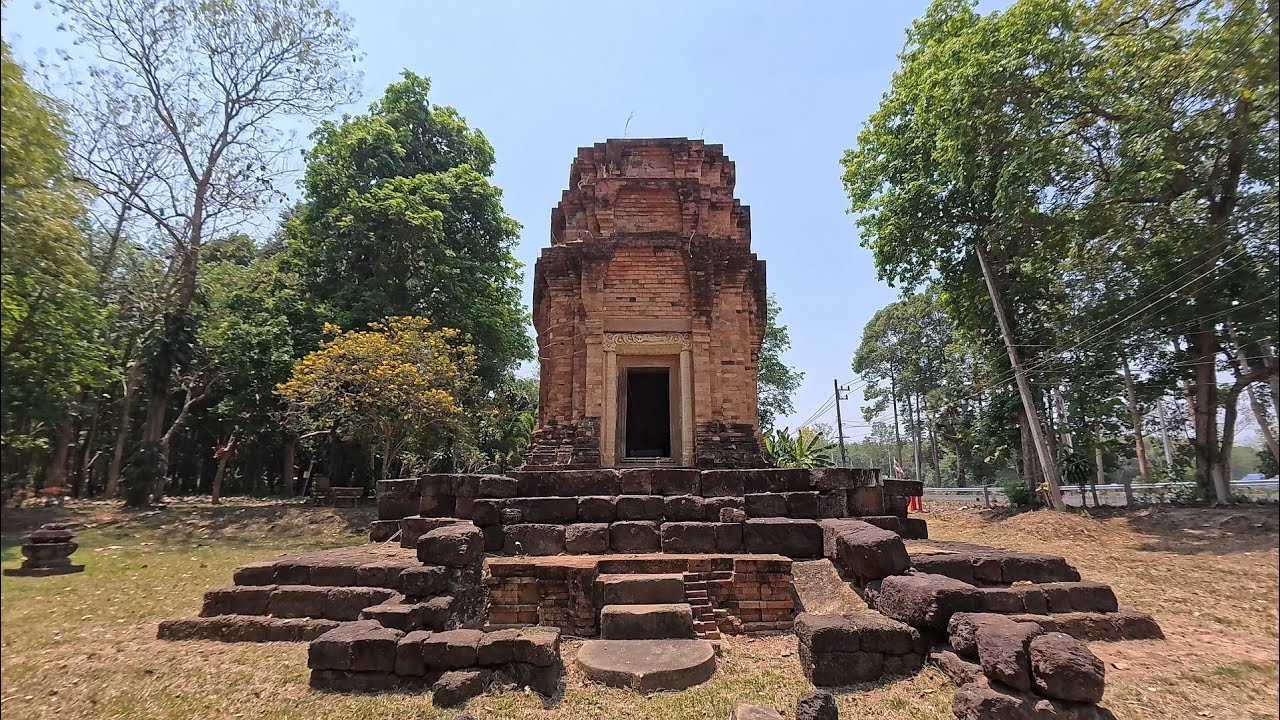
 Click to Access the Navigation Map GPS
 Historical Sites and Monuments(12)
 Landmarks and Memorials(1)
 Art, Craft Centres, Tradition(8)
 Places of Worship
 Temple(13)
 Other Sacred Sites(3)
 Suburban Living
 Village, Community(2)
 Nature and Wildlife
 National Parks and Marine Reserves(2)
 Dam, Reservoir, Lake(7)
 Waterfalls(5)
 River, Canal(5)
 Bays and Beaches(2)
 Entertainment and Agricultural
 Zoos and Aquariums(1)
 Farms, Parks and Ecotourism(3)


