
lovethailand home >Northeastern Travel Attractions >Nakhon Ratchasima Travel Attractions > Provinces in The Northeastern
TL;DR: Provinces in The Northeastern, Nakhon Ratchasima attractions : Travel Articles, Recipes, Travel Review, Food Review.
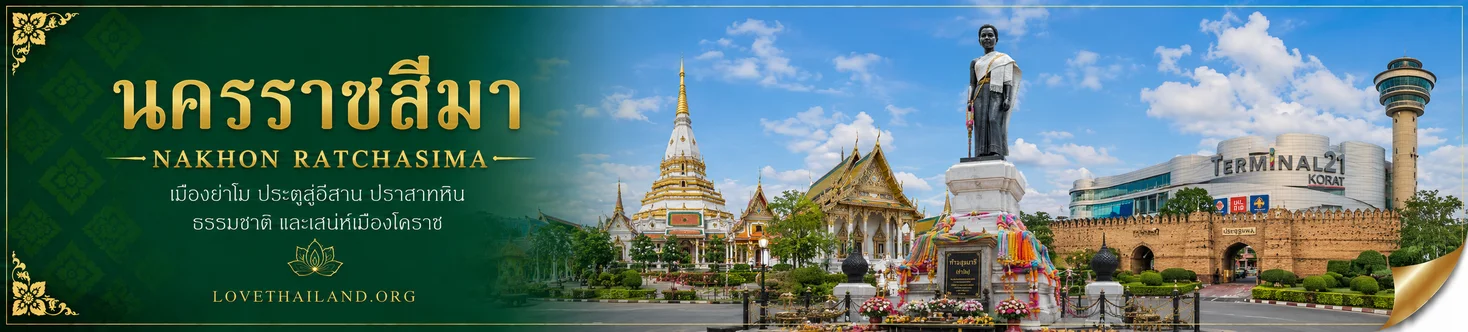
Provinces in The Northeastern
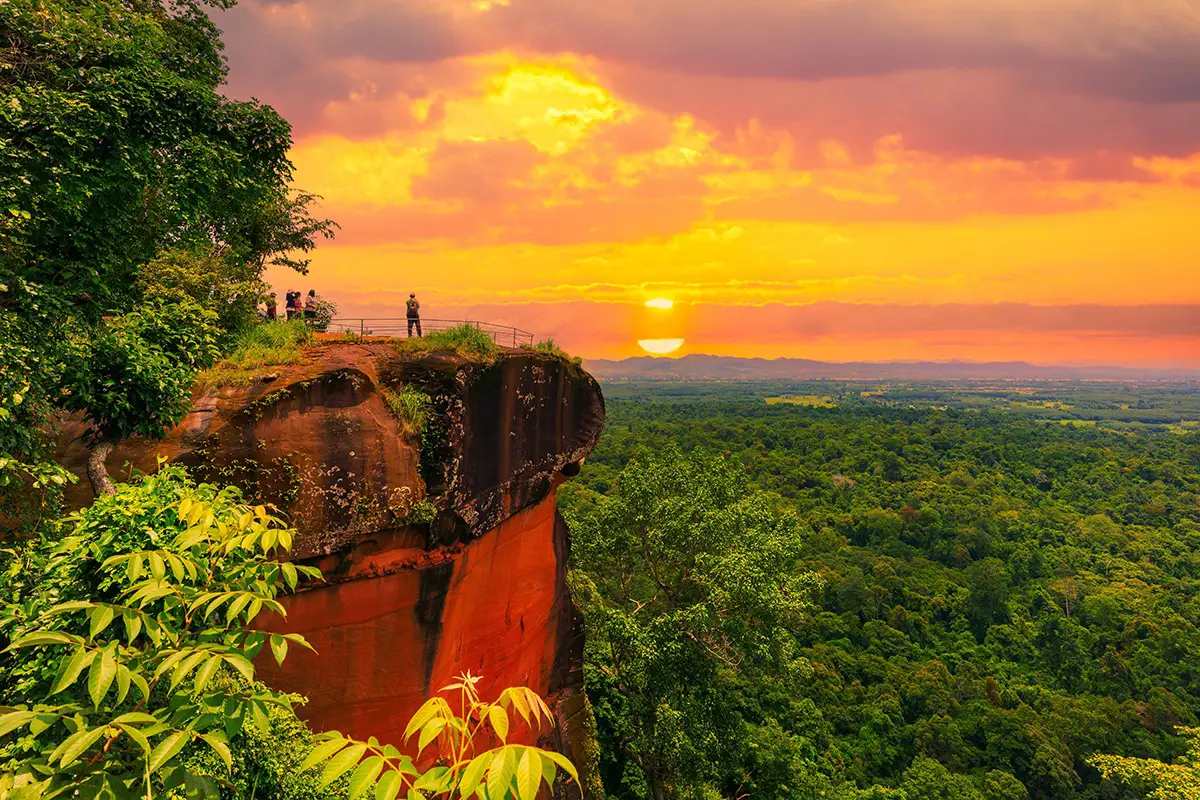
Open Days: Northeastern Thailand is a geographic region that can be visited throughout the year. Opening days of individual attractions depend on each local authority, temple, national park, museum, community, or operator.
Opening Hours: There are no single opening hours for the whole region. Tourist attractions, temples, national parks, museums, markets, restaurants, and hotels in each province operate on their own schedules.
The provinces of Northeastern Thailand, also known as Isan, consist of 20 provinces: Nakhon Ratchasima, Kalasin, Khon Kaen, Chaiyaphum, Nakhon Phanom, Bueng Kan, Buri Ram, Maha Sarakham, Mukdahan, Yasothon, Roi Et, Si Sa Ket, Loei, Sakon Nakhon, Surin, Nong Khai, Nong Bua Lam Phu, Udon Thani, Ubon Ratchathani, and Amnat Charoen. The region is Thailand’s largest geographic region, located on the Khorat Plateau and shaped by the Khorat Basin, Sakon Nakhon Basin, Phu Phan Range, Mekong River, Chi River, and Mun River. It is known for the Isan language, local food, mor lam music, kantruem and charieng music, merit-making traditions, Khmer stone sanctuaries, Buddhist temples, Mekong riverside towns, and border culture connected with Laos and Cambodia.
The provinces of Northeastern Thailand, commonly known as the Isan provinces, form one of the most distinctive regions of Thailand. Located in the northeastern part of the country, Isan has a strong identity shaped by geography, language, food, music, religion, festivals, and cross-border culture. The region is bordered by Laos to the north and east, with the Mekong River serving as a major natural boundary in several areas. To the south, it borders Cambodia and Eastern Thailand, while to the west it connects with Central Thailand and the lower northern region through the Phetchabun and Dong Phaya Yen mountain ranges. This position makes Isan a plateau region, an agricultural region, a Mekong borderland, and a cultural bridge between Thailand, Laos, and Cambodia.
Northeastern Thailand currently consists of 20 provinces: Nakhon Ratchasima, Kalasin, Khon Kaen, Chaiyaphum, Nakhon Phanom, Bueng Kan, Buri Ram, Maha Sarakham, Mukdahan, Yasothon, Roi Et, Si Sa Ket, Loei, Sakon Nakhon, Surin, Nong Khai, Nong Bua Lam Phu, Udon Thani, Ubon Ratchathani, and Amnat Charoen. This current 20-province framework includes Bueng Kan, so older lists that mention only 19 provinces are no longer suitable for present-day regional travel information.
In terms of land area, Northeastern Thailand covers about 105.53 million rai, or approximately 168,854 square kilometers, making it the largest region of Thailand. Because of its size, Isan should not be viewed as one uniform area. It includes major cities, agricultural plains, river basins, mountain landscapes, Mekong riverside towns, Thai-Lao border areas, Thai-Cambodian border areas, ancient Khmer heritage, national parks, religious sites, local craft communities, and diverse ethnic cultures.
The landscape of Northeastern Thailand is mainly a plateau that slopes generally toward the east. It is often described as a large basin-like highland with mountain rims and interior plains. The region is divided into two major physical zones: the Khorat Basin and the Sakon Nakhon Basin. The Khorat Basin is associated with the Mun and Chi river systems and covers much of lower and central Isan. It contains plateaus, lowlands, agricultural areas, and major cities. The Sakon Nakhon Basin lies in the northern part of the region, between the Phu Phan Range and the Mekong River, and is connected with the Songkhram River, the Loei River, Mekong tributaries, and several riverside towns.
The Phu Phan Range is an important mountain system that separates the Khorat Basin from the Sakon Nakhon Basin. It functions as a watershed, a source of streams, and a cultural connector between upper and lower Isan. Waterways in the Khorat Basin generally flow toward the Chi and Mun rivers, while waterways in the Sakon Nakhon Basin flow toward the Songkhram River or directly into the Mekong. This explains why the water system of Isan is deeply connected with the Mekong even in provinces that are not directly located on the Mekong River.
The most important rivers in Isan are the Mekong River, the Chi River, and the Mun River. The Mekong is an international river that flows through several countries in Southeast Asia and forms a natural boundary between Thailand and Laos in many parts of Northeastern Thailand. The Chi River flows through central Isan and supports large agricultural areas. The Mun River begins in the Khao Yai area of Nakhon Ratchasima, flows across lower Isan, and meets the Mekong in Ubon Ratchathani. These river systems have supported settlement, rice farming, fishing, local trade, riverside rituals, and community life for generations.
Nakhon Ratchasima, widely known as Korat, is the largest province by area and the main gateway from Bangkok to Northeastern Thailand. Many travelers enter Isan by Mittraphap Road through Nakhon Ratchasima before continuing to Khon Kaen, Buri Ram, Surin, Si Sa Ket, Ubon Ratchathani, Udon Thani, Nong Khai, or Nakhon Phanom. Korat is therefore an important starting point for exploring the region. It combines history, urban services, food, night markets, handicraft routes, temples, and access to Khao Yai and Chok Chai.
Khon Kaen is the leading city of central Isan, with strong roles in education, medicine, trade, conferences, and transportation. It has an airport, major roads, hotels, restaurants, and city services, making it a useful base for traveling to Maha Sarakham, Roi Et, Kalasin, Nong Bua Lam Phu, and nearby provinces. Udon Thani is a major city of upper Isan and a gateway to Nong Khai and Laos. Ubon Ratchathani is a major cultural and riverside city associated with the Candle Festival, Pha Taem, Sam Phan Bok, and the confluence area of the Mun and Mekong rivers.
Buri Ram, Surin, and Si Sa Ket form an important lower Isan cultural zone connected with Khmer and Kuy heritage. Buri Ram is known for Phanom Rung Historical Park and Muang Tam Sanctuary, two of Thailand’s most important Khmer stone sites. Surin is strongly associated with elephant culture, Kuy communities, silk, and kantruem music. Si Sa Ket has Thai-Khmer communities, temples, local traditions, and cultural landscapes linked with the Thai-Cambodian border. This group of provinces is ideal for travelers interested in archaeology, history, border culture, textiles, music, and community festivals.
Loei, Nong Khai, Bueng Kan, Nakhon Phanom, and Mukdahan present the Mekong side of Isan clearly. Loei is known for mountains, cool weather, Chiang Khan, and Kaeng Khut Khu. Nong Khai has the Thai-Lao Friendship Bridge, Wat Pho Chai, riverside markets, and border-town life. Bueng Kan is known for Phu Thok, Hin Sam Wan, and dramatic sandstone landscapes. Nakhon Phanom is famous for Phra That Phanom, Mekong riverside scenery, and Thai-Lao-Vietnamese cultural layers. Mukdahan has Ho Kaeo Mukdahan Tower, the Indochina Market, and the Second Thai-Lao Friendship Bridge. These provinces suit slow travel, riverside walks, temples, markets, scenic viewpoints, and cross-border culture.
The main local language of the region is Isan, also known as Lao-Isan. It is closely related to Lao culture on the right bank of the Mekong River. Standard Thai is widely used in major cities, schools, government offices, business, and formal communication. Nakhon Ratchasima also has the distinctive Thai Korat language. In lower Isan, Thai-Khmer dialects and Kuy or Suay are used in many communities. Other local languages and identities include Phu Thai, So, Saek, Kha, Kaleung, Yoy, and Yo. This linguistic diversity makes Isan more culturally layered than the single regional name may suggest.
Isan culture is distinctive in food, language, scripts, music, and performing arts. The Tai Noi script once played an important role in local manuscripts, Buddhist texts, and community records. Mor lam is a powerful performing art that combines singing, storytelling, poetry, the khaen reed instrument, and rhythmic performance. Kantruem and charieng music are especially associated with lower Isan and show Khmer cultural connections. Local dances and serng performances appear in merit-making events, temple fairs, festivals, and community celebrations. Together, these traditions create a cultural identity that is lively, expressive, and deeply rooted.
Isan food is one of the most influential regional cuisines in Thailand. Well-known dishes include som tam, larb, nam tok, koi, bamboo shoot soup, pon, jaew, om, mok, grilled chicken, sticky rice, khao jee, pla ra, mushroom curry, ant eggs, and seasonal local dishes. The flavors are bold, often spicy, sour, salty, herbal, smoky, and deeply aromatic. Many dishes reflect local knowledge of food preservation, seasonal ingredients, rice-field ecology, and shared meals within families and communities.
Northeastern Thailand is also a region of year-round merit-making and festival culture. Important traditions include the Rocket Festival, Bun Phawet, Ubon Candle Festival, Illuminated Boat Procession, Phi Ta Khon, Surin Elephant Round-Up, Wax Castle Festival, Khao Jee merit-making, end-of-Buddhist-Lent events along the Mekong, and many local temple fairs. These festivals connect Buddhism, folk beliefs, rainfall, agricultural cycles, ancestor respect, sacred beings, and community cooperation. Travelers who visit during festival seasons can see food, music, rituals, local clothing, processions, and community life in a concentrated form.
Historically and archaeologically, Isan is one of Thailand’s richest regions. Ban Chiang in Udon Thani is associated with prehistoric settlement and early cultural development. Phimai Historical Park in Nakhon Ratchasima, Phanom Rung Historical Park and Muang Tam Sanctuary in Buri Ram, and stone sanctuaries in Surin, Si Sa Ket, and Ubon Ratchathani show the strong influence of ancient Khmer civilization in lower Isan. These sites reveal that Northeastern Thailand has long been connected with the Mun River basin, Mekong basin, and the wider Khmer world.
Natural attractions are also highly varied. Isan includes Khao Yai National Park, Phu Kradueng, Phu Ruea, Phu Luang, Phu Laen Kha, Pa Hin Ngam, Pha Taem, Sam Phan Bok, Hin Sam Wan, Phu Thok, Lam Takhong Reservoir, Ubol Ratana Dam, and Sirindhorn Dam. Travelers can hike, see misty viewpoints, visit wildflower fields, explore Mekong river landscapes, tour stone sanctuaries, visit night markets, relax near reservoirs, and experience temples and community life. In the cool season, mountain and Mekong destinations are especially popular because the weather becomes more comfortable for outdoor travel.
The climate of Northeastern Thailand follows Thailand’s three general seasons: hot season, rainy season, and cool season. The hot season runs roughly from mid-February to mid-May and is generally hot and dry. The rainy season runs roughly from mid-May to mid-October and brings monsoon rain that supports farming and refills waterways. The cool season runs from around mid-October to mid-February and brings cooler, drier air, especially to upper Thailand and the northeast. This is one of the best periods for mountains, riverside towns, national parks, and outdoor festivals.
Getting There from Bangkok is practical by road, rail, and air. By car or bus, Mittraphap Road is the main route through Saraburi and Nakhon Ratchasima before branching to other provinces. Northeastern railway lines connect Bangkok with Nakhon Ratchasima, Khon Kaen, Udon Thani, Nong Khai, Ubon Ratchathani, and other towns. Several provinces also have airports, including Nakhon Ratchasima, Khon Kaen, Udon Thani, Ubon Ratchathani, Buri Ram, Roi Et, Sakon Nakhon, Nakhon Phanom, and Loei. The best transport choice depends on the chosen route and available travel time.
For efficient travel planning, Isan is best divided into zones. Lower Isan routes include Nakhon Ratchasima, Buri Ram, Surin, Si Sa Ket, and Ubon Ratchathani, with strong themes of Khmer heritage, border culture, festivals, and the lower Mekong. Central Isan routes include Nakhon Ratchasima, Khon Kaen, Maha Sarakham, Roi Et, Kalasin, and Chaiyaphum, focusing on cities, museums, food, local culture, and nature. Upper Isan and Mekong routes include Udon Thani, Nong Khai, Bueng Kan, Nong Bua Lam Phu, Loei, Sakon Nakhon, Nakhon Phanom, Mukdahan, Amnat Charoen, and Yasothon, with emphasis on the Mekong River, sacred relics, mountains, border towns, and folk festivals.
As a region, Northeastern Thailand can be visited all year because it is not a single attraction with a gate, admission booth, or fixed opening hours. However, each individual attraction has its own conditions. National parks have official hours and entrance fees. Temples usually open during daytime hours. Museums may close on certain weekdays. Night markets open in the evening. Restaurants and hotels operate according to their own schedules. Local festivals follow annual calendars. Travelers should check specific destinations before visiting parks, mountain trails, museums, seasonal events, or border areas.
For international travelers, Isan presents a side of Thailand that is different from Bangkok, Chiang Mai, Phuket, or Pattaya. It offers Mekong riverside towns, morning markets, agricultural life, powerful food culture, Buddhist temples, sacred relics, Khmer ruins, mor lam music, Isan language, and border communities connected with Laos and Cambodia. Traveling through Isan may require more time than visiting Thailand’s most famous tourist cities, but it gives a deeper experience of regional identity, everyday life, food, history, and local culture.
The provinces of Northeastern Thailand should not be understood only as a dry inland region far from the sea. They form a complex cultural and ecological region with their own character. Korat is the gateway city, Khon Kaen is a central urban hub, Udon Thani connects to Laos, Ubon Ratchathani is a cultural and river city, Buri Ram is known for Khmer heritage and modern sport, Surin is associated with elephants and silk, Loei is known for mountains, Nakhon Phanom for Mekong temples, and Bueng Kan for sandstone landscapes. Together, these places make Isan one of the most meaningful regions for understanding Thailand.
In summary, the provinces of Northeastern Thailand, or the Isan provinces, consist of 20 provinces on Thailand’s largest plateau region. The area is linked with Laos and Cambodia, shaped by the Khorat Basin, Sakon Nakhon Basin, Phu Phan Range, Mekong River, Chi River, and Mun River, and known for Isan language, local food, music, dance, merit-making traditions, temples, sacred relics, stone sanctuaries, national parks, riverside towns, and community life. Visiting Isan is not just about seeing one attraction; it is a way to understand one of Thailand’s deepest cultural regions.
| Article Topic | Provinces Of Northeastern Thailand / Isan Provinces Of Thailand |
| Location | Northeastern Thailand, bordered by Laos to the north and east, Cambodia and Eastern Thailand to the south, and Central Thailand plus the lower northern region to the west |
| Approximate Area | About 105.53 million rai, or approximately 168,854 square kilometers |
| Regional Reference Position | The northeastern plateau of Thailand, connected with the Mekong River, Khorat Basin, and Sakon Nakhon Basin |
| Number Of Provinces | 20 Provinces |
| Province List | 1. Nakhon Ratchasima 2. Kalasin 3. Khon Kaen 4. Chaiyaphum 5. Nakhon Phanom 6. Bueng Kan 7. Buri Ram 8. Maha Sarakham 9. Mukdahan 10. Yasothon 11. Roi Et 12. Si Sa Ket 13. Loei 14. Sakon Nakhon 15. Surin 16. Nong Khai 17. Nong Bua Lam Phu 18. Udon Thani 19. Ubon Ratchathani 20. Amnat Charoen |
| Key Geography | Khorat Plateau, Khorat Basin, Sakon Nakhon Basin, Phu Phan Range, Dong Phaya Yen Range, Phetchabun Range, Phanom Dong Rak Range, Mekong River, Chi River, and Mun River |
| Distinctive Features | Thailand’s largest region, known for Mekong culture, Isan food, Isan language, mor lam music, kantruem and charieng music, merit-making festivals, Khmer stone sanctuaries, Buddhist temples, Mekong towns, border culture, and diverse natural landscapes |
| Current Status | An important geographic and cultural region of Thailand that can be visited year-round. Individual attractions operate according to their own schedules and conditions. |
| Open Days | Travelable Year-Round |
| Opening Hours | No single opening hours for the entire region. Check each attraction, temple, national park, museum, market, restaurant, or event in the province you plan to visit. |
| Admission Fee | No admission fee for the region as a whole. Costs depend on individual attractions, activities, national parks, museums, transportation, restaurants, and accommodation. |
| Caretaker / Related Authorities | Provincial administrations, district offices, local administrative organizations, tourism agencies, national park authorities, temples, communities, and operators in each area. There is no single caretaker for the entire region. |
| Languages And Cultural Groups | Isan language, Standard Thai, Thai Korat, Thai-Khmer dialects, Kuy or Suay, Phu Thai, So, Saek, Kaleung, Yoy, Yo, and several local cultural communities |
| Signature Food | Som Tam, Larb, Nam Tok, Koi, Bamboo Shoot Soup, Pon, Jaew, Om, Mok, Grilled Chicken, Sticky Rice, Khao Jee, Pla Ra, Mushroom Curry, Ant Eggs, and Mekong River Dishes |
| Important Festivals | Rocket Festival, Ubon Candle Festival, Illuminated Boat Procession, Phi Ta Khon, Surin Elephant Round-Up, Bun Phawet, Wax Castle Festival, Mekong End-Of-Buddhist-Lent Festivals, and local merit-making events |
| Main Travel Zones | Lower Isan: Nakhon Ratchasima, Buri Ram, Surin, Si Sa Ket, Ubon Ratchathani Central Isan: Khon Kaen, Maha Sarakham, Roi Et, Kalasin, Chaiyaphum Upper Isan And Mekong Route: Udon Thani, Nong Khai, Bueng Kan, Nong Bua Lam Phu, Loei, Sakon Nakhon, Nakhon Phanom, Mukdahan, Amnat Charoen, Yasothon |
| Travel Information | From Bangkok, travelers commonly take Mittraphap Road through Saraburi to Nakhon Ratchasima, then continue to other Isan provinces by car, bus, train, or domestic flight. Key travel bases include Nakhon Ratchasima, Khon Kaen, Udon Thani, Ubon Ratchathani, Buri Ram, Roi Et, Sakon Nakhon, Nakhon Phanom, and Loei. |
| Facilities | Airports in major provinces, railway stations, bus terminals, hotels, resorts, restaurants, visitor centers, local markets, shopping malls, hospitals, and tour services in key cities |
| Major Attractions In Isan | 1. Phimai Historical Park, Nakhon Ratchasima Province, about 60 km from Nakhon Ratchasima City, Tel. 044-471-568 2. Phanom Rung Historical Park, Buri Ram Province, about 135 km from Nakhon Ratchasima City, Tel. 044-782-715 3. Wat Phra That Phanom Woramahawihan, Nakhon Phanom Province, about 500 km from Nakhon Ratchasima City, Tel. 042-541-050 4. Pha Taem National Park, Ubon Ratchathani Province, about 520 km from Nakhon Ratchasima City, Tel. 045-252-581 5. Thai-Lao Friendship Bridge, Nong Khai Province, about 330 km from Nakhon Ratchasima City 6. Phu Kradueng, Loei Province, about 275 km from Nakhon Ratchasima City |
| Restaurants Near The Nakhon Ratchasima Gateway | 1. Chez Andy Swiss Restaurant & Steak House, about 1 km from Thao Suranari Monument, Tel. 044-289-556 2. Krua Suwimol, about 2 km from Thao Suranari Monument, Tel. 044-242-444 3. Roti Cafe @ Night Suan Mak, about 1 km from Thao Suranari Monument, Tel. 084-007-0031 4. Tao Thueng Ohim Night Bazaar Suan Mak, about 1 km from Thao Suranari Monument, Tel. 087-956-8933 5. Krua Dan Kwian, about 19 km from Nakhon Ratchasima City, Tel. 044-338-505 6. Chokchai Steakhouse, Farm Chokchai Pak Chong Branch, about 90 km from Nakhon Ratchasima City, Tel. 086-328-0189 |
| Accommodations Near The Nakhon Ratchasima Gateway | 1. Korat Hotel, about 1 km from Thao Suranari Monument, Tel. 093-325-7996 2. Centre Point Hotel Terminal21 Korat, about 2 km from Thao Suranari Monument, Tel. 044-498-880, 044-498-870 3. The Rich Hotel Korat, about 3 km from Thao Suranari Monument, Tel. 093-964-7416 4. Kantary Hotel Korat, about 5 km from Thao Suranari Monument, Tel. 044-353-011-2 5. Centara Korat, about 5 km from Thao Suranari Monument, Tel. 044-251-234 6. Hotels in Khon Kaen, Udon Thani, Ubon Ratchathani, and Nakhon Phanom are suitable bases depending on the selected travel route. |
Frequently Asked Questions (FAQ)
Q: How many provinces are there in Northeastern Thailand?
A: Northeastern Thailand has 20 provinces: Nakhon Ratchasima, Kalasin, Khon Kaen, Chaiyaphum, Nakhon Phanom, Bueng Kan, Buri Ram, Maha Sarakham, Mukdahan, Yasothon, Roi Et, Si Sa Ket, Loei, Sakon Nakhon, Surin, Nong Khai, Nong Bua Lam Phu, Udon Thani, Ubon Ratchathani, and Amnat Charoen.
Q: How large is Northeastern Thailand?
A: Northeastern Thailand covers about 105.53 million rai, or approximately 168,854 square kilometers, making it the largest region of Thailand.
Q: What are the main geographic zones of Isan?
A: Isan is mainly a plateau divided into two major basins: the Khorat Basin around the Mun and Chi river systems, and the Sakon Nakhon Basin in the northern part of the region between the Phu Phan Range and the Mekong River.
Q: Which province is the main gateway to Isan from Bangkok?
A: Nakhon Ratchasima, or Korat, is the main gateway from Bangkok to Isan because it lies on Mittraphap Road and connects onward to central, lower, and upper Isan routes.
Q: What is the main language of Isan?
A: The main local language is Isan, also known as Lao-Isan. Standard Thai is widely used in cities and formal communication, while Thai Korat, Thai-Khmer dialects, Kuy or Suay, Phu Thai, So, Saek, and other local languages are found in specific communities.
Q: What cultural features is Isan known for?
A: Isan is known for local food, the Isan language, Tai Noi script heritage, mor lam music, kantruem music, charieng music, dances, serng performances, merit-making traditions, Mekong festivals, and community culture connected with Laos and Cambodia.
Q: Which route is suitable for first-time travelers to Isan?
A: Travelers from Bangkok can start in Nakhon Ratchasima, then choose a route based on interest: lower Isan for Khmer stone sanctuaries, central Isan for major cities and local culture, or the Mekong route for riverside towns, temples, and border culture.
Q: Is Northeastern Thailand suitable for foreign travelers?
A: Yes. It is suitable for foreign travelers who want to understand local Thailand through regional food, mor lam music, Mekong towns, Khmer heritage, Buddhist temples, sacred relics, local markets, and community life beyond the main tourist cities.
 Category: ●Travel Articles, Recipes
 Group: ●Travel Review, Food Review
Last Update : 2 WeekAgo
 Last Update : 2 WeekAgo
Recommend

 Art, Culture and Heritage
 Historical Sites and Monuments(20)
 Landmarks and Memorials(5)
 Art, Craft Centres, Tradition(7)
 Museums(6)
 Art Gallery(1)
 Educational Places
 Educational Gardens, Farm(4)
 Places of Worship
 Temple(29)
 Mosque(1)
 Other Sacred Sites(6)
 Research and Development
 Royal Project(3)
 Suburban Living
 Village, Community(6)
 Local Market(4)
 Floating Market(1)
 Nature and Wildlife
 National Parks and Marine Reserves(3)
 Mountain (Doi)(5)
 Dam, Reservoir, Lake(8)
 Waterfalls(9)
 Hot Springs(1)
 Caves(2)
 Flower Field(1)
 River, Canal(8)
 Bays and Beaches(2)
 Other natural attractions(3)
 Entertainment and Agricultural
 Zoos and Aquariums(1)
 Animal camps and shows(1)
 Farms, Parks and Ecotourism(21)
 Waterpark(2)
 Outdoor and Adventure Activities(6)
 Shopping
 Shopping and Night Market(2)
Travel Review, Food Review(5)
Shopping and Night Market(2)
Travel Review, Food Review(5)


