
lovethailand home >Northeastern Travel Attractions >Loei Travel Attractions >Chiang Khan >Bu Hom > Phra Phutthabat Phu Kwai Ngoen
TL;DR: Phra Phutthabat Phu Kwai Ngoen is located at Ban Pha Baen, Bu Hom Subdistrict, Chiang Khan District, Loei Province, open Daily, hours 08.00 – 18.00.

Phra Phutthabat Phu Kwai Ngoen
Open Days: Daily
Opening Hours: 08.00 – 18.00
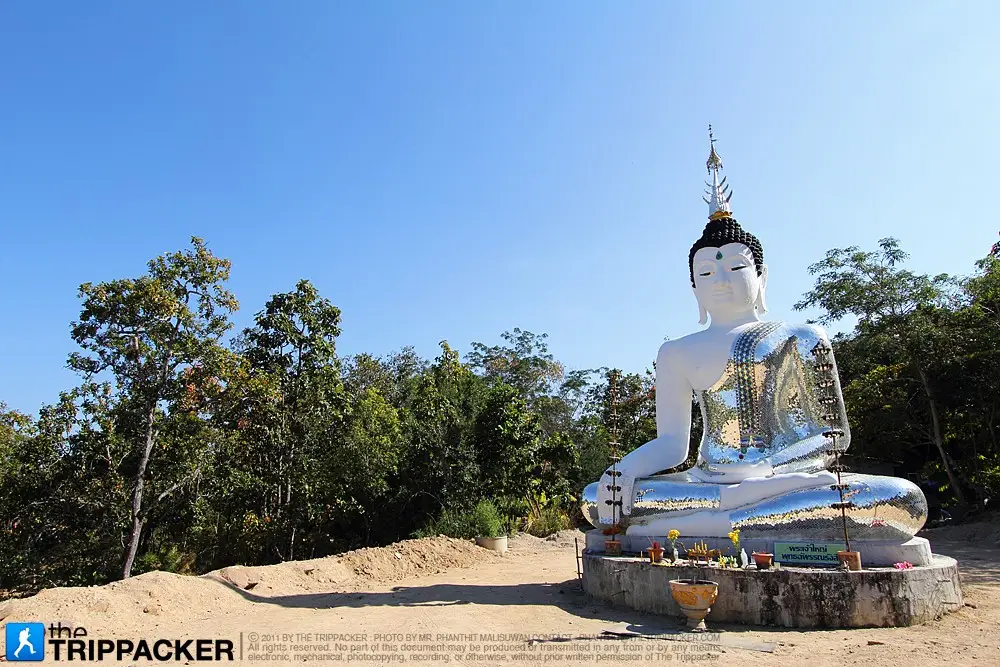
Phra Phutthabat Phu Kwai Ngoen in Loei Province is a revered Buddhist footprint site located at Ban Pha Baen, Bu Hom Subdistrict, Chiang Khan District. It is one of the most meaningful sacred places in the Chiang Khan area, especially for local communities around Ban Pha Baen, Ban Umung, and Bu Hom. The footprint measures about 120 centimeters in length and 65 centimeters in width. It is enshrined on a sharpening stone, locally described as a whetstone or knife-sharpening rock, and was registered as an ancient monument in 1935. For foreign travelers, this site offers more than a short temple visit. It combines Buddhist devotion, local legend, mountain scenery, rural community memory, and a quiet atmosphere above the well-known riverside town of Chiang Khan.
Phra Phutthabat Phu Kwai Ngoen stands in the mountainous area of Ban Pha Baen, a village whose name is closely connected with local geography and legend. In local interpretation, “pha” refers to a cliff or rocky mountain, while “baen” is connected with the idea of being struck or split. The name is linked with stories about the mountain, a silver buffalo, and the sacred footprint. Visiting this place therefore gives travelers a deeper understanding of Chiang Khan beyond the wooden houses, walking street, and Mekong riverside scenery. It introduces another side of Chiang Khan: hill communities, sacred mountains, ancient Buddhist belief, and local storytelling.
The Buddha footprint itself is the central sacred object of the site. Although it has no inscription, it has long been worshipped by local people. Its importance does not come only from its size or ancient-monument status. It comes from the living faith surrounding it. For generations, villagers have come to pay respect, make merit, and ask for blessings. In the past, the journey was difficult, and the road up to the site was not convenient. Because of this, local people believed that only those with sufficient merit and destiny could successfully reach the footprint. Those without enough merit might become lost, face obstacles, or fail to arrive despite their intention.
This belief about merit and destiny is one of the strongest cultural stories of Phra Phutthabat Phu Kwai Ngoen. It reflects how difficult travel once was and how meaningful it felt to reach a sacred mountain site. In earlier times, getting to the footprint required effort, patience, and favorable circumstances. Arriving successfully was not simply transportation; it was an act of devotion. Today, cars and motorcycles can reach the area much more easily, but the story remains part of the site’s identity. It gives the visit a spiritual depth that goes beyond sightseeing.
Every year, on the full moon day of the third lunar month, the temple holds an annual celebration for Phra Phutthabat Phu Kwai Ngoen. This event is an important local merit-making ceremony for people in the surrounding communities. Villagers and devotees come to worship the footprint, make merit, listen to Buddhist teachings, and take part in community activities. The annual ceremony shows that the site is not merely an old monument preserved in isolation. It remains a living sacred place within the religious life of local people.
The temple is set on a hill in Bu Hom Subdistrict. The elevated location gives it a calm and open atmosphere, with views of the surrounding natural landscape. It is close enough to Chiang Khan town to be included in a normal travel itinerary, yet it feels quieter than the busy walking street and riverside area. Morning is a good time to visit because the air is cooler and the atmosphere is peaceful. In the late rainy season and cool season, the surrounding hills can be especially pleasant, and on some mornings the landscape may feel misty and fresh.
Inside the temple area are several important zones: the hall containing the Buddha footprint, the worship courtyard, stairways, a viewpoint area, Buddha images, the silver buffalo statue, and animal areas where visitors often see rabbits and wild boars. The animal-feeding area has become a memorable feature for families and children, but visitors should act responsibly. Feed animals only in appropriate areas, avoid giving unsuitable food, and supervise children closely. This helps keep the visit safe for both visitors and animals.
The silver buffalo statue is an important visual symbol of the site. It connects the temple with the Phu Kwai Ngoen legend and helps visitors understand the story more clearly. Many travelers take photographs near the statue before or after paying respect to the footprint. The combination of the footprint, the ancient stone, the mountain location, the buffalo legend, and the view gives the site a distinctive character among Chiang Khan attractions.
Visitors should approach the footprint area respectfully. Dress modestly, speak softly, and avoid touching the sacred stone unnecessarily. Do not step over barriers, place objects on the footprint stone, or treat the area as a casual photo prop. If other worshippers are praying, allow them space and time. Respectful behavior helps preserve the atmosphere of the site and honors the local community that has cared for it for generations.
Travel to Phra Phutthabat Phu Kwai Ngoen is straightforward from Chiang Khan. Use the Chiang Khan – Pak Chom route for about 6 kilometers until reaching Ban Pha Baen. From there, take the road toward Ban Umung for about 3 kilometers, then continue up the hill to the temple for about 1 kilometer. In the past, the final section was more difficult, but the route is now much more accessible. Still, drivers should be cautious on the hill road, especially in rainy weather or during busy festival periods.
Getting There is easiest by private car, rented motorcycle, or hired local transport from Chiang Khan. Travelers staying near Chiang Khan Walking Street can drive out toward the Chiang Khan – Pak Chom road and follow signs or online maps to Wat Phra Phutthabat Phu Kwai Ngoen. If hiring transport, it is best to agree on the round-trip fare and pickup time before departure. The temple is close enough to combine with Kaeng Khut Khu, local cafés, and riverside attractions in the same half-day route.
The best time to visit is in the morning or late afternoon. Morning visits are cooler and quieter, making them suitable for prayer and photography. Late afternoon is good for softer light around the temple buildings, stairways, silver buffalo statue, and mountain viewpoint. Midday can be hot, especially in open areas, so a hat, drinking water, and comfortable footwear are useful. During the rainy season, visitors should be careful on slopes and outdoor walking areas.
Phra Phutthabat Phu Kwai Ngoen fits well into a Chiang Khan itinerary. Travelers can begin with the footprint in the morning, continue to Kaeng Khut Khu and the Kaeng Khut Khu Museum, return to Chiang Khan town for lunch, and later walk along Chai Khong Road or Chiang Khan Walking Street. With more time, the route can include Phu Thok for sunrise views or the Chiang Khan Skywalk at Pak Tom for a panoramic Mekong and Hueang River landscape.
For families, the site is relatively easy to visit because it offers worship areas, a viewpoint, and animal-feeding activities. Children should be supervised near stairways, sloped areas, and animals. Elderly visitors should walk slowly, rest when needed, and avoid steep sections during rain. The temple can be enjoyed without rushing; a visit of about 1 to 2 hours is usually enough for worship, photography, animal feeding, and resting at the viewpoint.
From a cultural perspective, this site helps visitors understand Chiang Khan more fully. Chiang Khan is often known for its old wooden houses, riverside walking street, and slow-life atmosphere. Yet the district also includes hill temples, sacred footprints, village legends, annual merit-making traditions, and communities whose lives are connected with mountains as well as the Mekong River. Phra Phutthabat Phu Kwai Ngoen adds this sacred and rural dimension to the Chiang Khan travel experience.
Because the footprint is a registered ancient monument, conservation-minded behavior is important. Visitors should not scratch, rub, climb on, or place objects on the footprint stone. They should not damage any protective structure around it. The site belongs not only to today’s travelers but also to the local community and future generations. Respecting the ancient monument is part of respecting the cultural heritage of Loei Province.
The lasting appeal of Phra Phutthabat Phu Kwai Ngoen lies in its simplicity and meaning. It is not a large commercial attraction, but it has strong spiritual power through its footprint, legend, annual ceremony, mountain setting, and local devotion. After worshipping and looking out over the surrounding hills, visitors can feel that this place is valuable not only for photographs but also for quiet reflection.
Phra Phutthabat Phu Kwai Ngoen is therefore a worthwhile stop for anyone visiting Chiang Khan. It offers a sacred Buddha footprint on a whetstone, an ancient-monument history, a full-moon annual festival in the third lunar month, a local legend of merit and destiny, a silver buffalo symbol, mountain views, and a peaceful atmosphere above the riverside town. With modest dress, respectful behavior, and enough time to observe the site calmly, visitors will gain a deeper appreciation of Chiang Khan’s spiritual and cultural landscape.
| Name | Phra Phutthabat Phu Kwai Ngoen / Wat Phra Phutthabat Phu Kwai Ngoen |
| Location | Ban Pha Baen, Bu Hom Subdistrict, Chiang Khan District, Loei Province |
| Address | 52 Moo 6, Chiang Khan – Pak Chom Road, Bu Hom Subdistrict, Chiang Khan District, Loei Province 42110, Thailand |
| Highlights | Ancient Buddha footprint on a whetstone, mountain temple atmosphere, local legend of the silver buffalo, viewpoint, animal-feeding area, and strong community faith |
| History / Ancient Monument Status | The footprint was registered as an ancient monument in 1935 and has long been revered by people in Chiang Khan and nearby communities |
| Footprint Features | Approximately 120 cm long and 65 cm wide, enshrined on a whetstone, with a crack-like form and no inscription |
| Annual Tradition | Annual worship ceremony on the full moon day of the third lunar month, an important merit-making event for local communities |
| Travel Information | Take the Chiang Khan – Pak Chom route for about 6 km to Ban Pha Baen, continue toward Ban Umung for about 3 km, then go up the hill to the temple for about 1 km |
| Current Status | Open as a Buddhist temple and registered ancient monument for worship, merit-making, viewpoint visits, and travel routes around Chiang Khan |
| Open Days | Daily |
| Opening Hours | 08.00 – 18.00 |
| Fees | No Admission Fee |
| Facilities | Parking area, temple courtyard, Buddha footprint hall, worship area, toilets, viewpoint, animal-feeding area, and local shops during visitor periods |
| Main Areas / Zones | Buddha footprint hall, worship courtyard, stairway, silver buffalo statue, mountain viewpoint, rabbit area, wild boar area, and lower parking area |
| Caretaker | Wat Phra Phutthabat Phu Kwai Ngoen |
| Tourism Contact | Tourism Authority of Thailand, Loei Office, Tel. 042-812-812 |
| Nearby Tourist Attractions | 1. Ban Pha Baen, Bu Hom Subdistrict, about 1 km 2. Baan Tid Din Chiang Khan, about 4.9 km 3. Kaeng Khut Khu, about 5 km 4. Kaeng Khut Khu Museum, about 5.3 km 5. Rai Wang Won, about 6.1 km 6. Chiang Khan Walking Street, about 9.5 km 7. Wat Si Khun Mueang, about 10 km 8. Phu Thok Chiang Khan, about 13 km, Tel. 042-821-664 9. Chiang Khan Skywalk / Phu Khok Ngio Giant Buddha, about 30 km, Tel. 065-990-9385 |
| Nearby Restaurants | 1. Bcamp Chiangkhan, about 2.6 km, Tel. 086-857-6633 2. Baan Tid Din Chiang Khan, about 4.9 km 3. Krua Nucha, Chiang Khan Hill Resort, about 5.2 km, Tel. 081-860-8810 4. Soi Saw Chiang Khan, about 9.5 km, Tel. 042-821-314 5. Pa Bua Wan Khao Pun Nam Jaew, about 9.8 km, Tel. 083-418-9809 6. With A View @ ChiangKhan, about 9.9 km, Tel. 042-810-696 |
| Nearby Accommodations | 1. Chiang Khan Hill Resort, about 5.2 km, Tel. 094-591-5251, 081-860-8810 2. The Camp Chiangkhan, about 7 km, Tel. 095-727-4555, 080-343-1111 3. Chiangkhan River Mountain Resort, about 8 km, Tel. 042-822-191, 083-616-4961 4. The White House Chiangkhan Villa, about 9.5 km, Tel. 089-529-2698 5. With A View Hotel @ Chiangkhan, about 9.9 km, Tel. 091-058-0185, 042-810-696 6. Riverside Chiangkhan Resort, about 10 km, Tel. 084-336-7525, 042-821-477 |
Frequently Asked Questions (FAQ)
Q: Where is Phra Phutthabat Phu Kwai Ngoen located?
A: It is located at Ban Pha Baen, Bu Hom Subdistrict, Chiang Khan District, Loei Province, along the Chiang Khan – Pak Chom route.
Q: What are the opening hours of Phra Phutthabat Phu Kwai Ngoen?
A: The temple is open daily from 08.00 to 18.00. Morning and late afternoon are the best times for worship, views, and photography.
Q: What are the features of the Buddha footprint?
A: The footprint is about 120 centimeters long and 65 centimeters wide. It is enshrined on a whetstone, has a crack-like form, and has no inscription.
Q: When was Phra Phutthabat Phu Kwai Ngoen registered as an ancient monument?
A: It was registered as an ancient monument in 1935 and has long been revered by local people in Chiang Khan and Bu Hom.
Q: When is the annual ceremony held?
A: The annual worship ceremony is held every year on the full moon day of the third lunar month and is an important local merit-making tradition.
Q: How can travelers get to Phra Phutthabat Phu Kwai Ngoen?
A: From Chiang Khan, take the Chiang Khan – Pak Chom road for about 6 km to Ban Pha Baen, continue toward Ban Umung for about 3 km, then go up the hill to the temple for about 1 km.
Q: Is there an admission fee?
A: There is no admission fee. Visitors may pay respect and make merit according to their faith while observing proper temple etiquette.
Q: What nearby attractions can be visited after Phra Phutthabat Phu Kwai Ngoen?
A: Nearby attractions include Kaeng Khut Khu, Kaeng Khut Khu Museum, Chiang Khan Walking Street, Wat Si Khun Mueang, Phu Thok, and Chiang Khan Skywalk.
 Category: ●Places of Worship
 Group: ●Other Sacred Sites
Last Update : 3 MonthAgo
 Last Update : 3 MonthAgo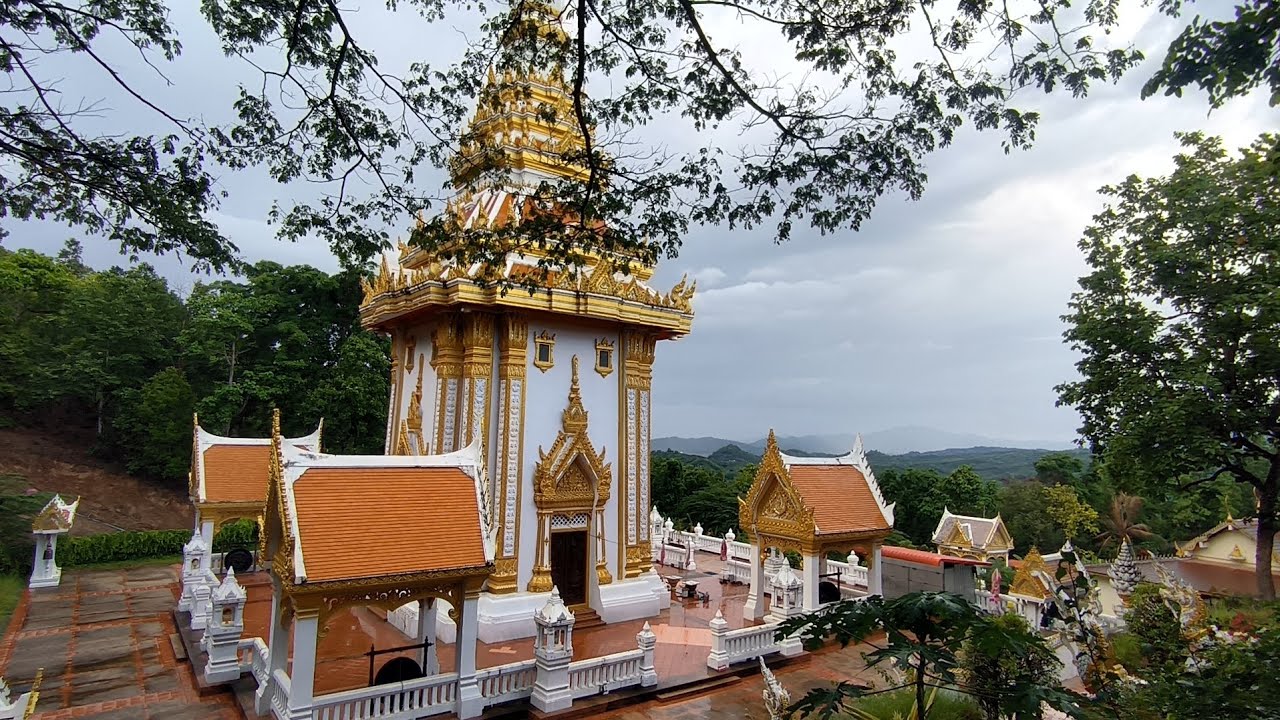
 Click to Access the Navigation Map GPS
Phra Phutthabat Phu Kwai Ngoen Map
Recommend

 Art, Culture and Heritage
 Historical Sites and Monuments(2)
 Landmarks and Memorials(3)
 Art, Craft Centres, Tradition(2)
 Museums(4)
 Art Gallery(1)
 Educational Places
 Educational Gardens, Farm(2)
 Temple(16)
Other Sacred Sites(8)
Temple(16)
Other Sacred Sites(8)
 Research and Development
 Royal Project(3)
 Suburban Living
 Village, Community(3)
 Local Market(1)
 Nature and Wildlife
 National Parks and Marine Reserves(5)
 Mountain (Doi)(10)
 Dam, Reservoir, Lake(7)
 Waterfalls(21)
 Caves(3)
 River, Canal(5)
 Bays and Beaches(1)
 Other natural attractions(1)
 Entertainment and Agricultural
 Farms, Parks and Ecotourism(8)
 Waterpark(1)
 Outdoor and Adventure Activities(2)
 Travel Articles, Recipes
 Travel Review, Food Review(1)


